
Terrazzo flooring has become a popular surface solution in modern residential and commercial spaces due to its durability, design flexibility, and long lifespan. It is widely used in high-traffic environments because of its strength and aesthetic versatility. Understanding how terrazzo works, how it is installed, and where it performs best helps property owners make informed decisions.
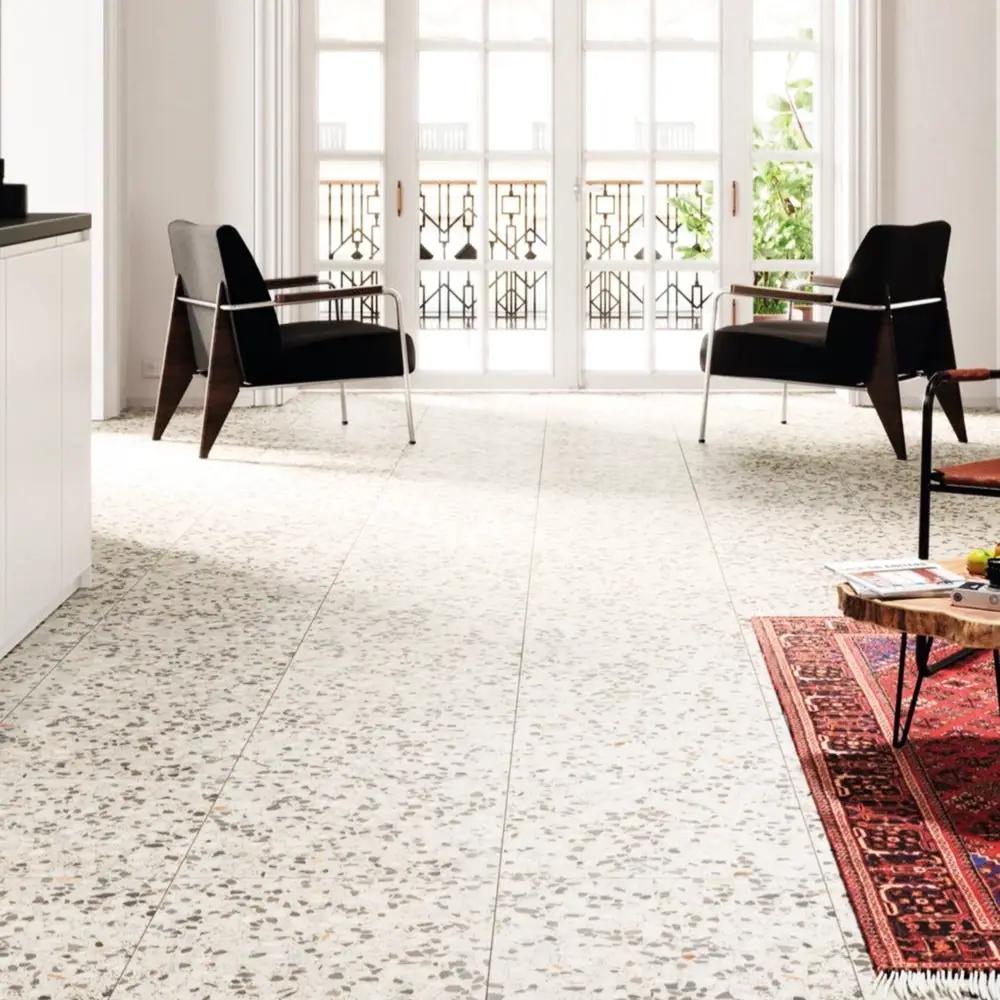
In this guide, you will learn the fundamentals of terrazzo flooring, including its structure, benefits, applications, installation process, maintenance requirements, and how it compares with other flooring systems. The information provided is designed to support research and general knowledge for anyone exploring flooring options in contemporary interior design.
What Terrazzo Flooring Is and How It Is Made
Terrazzo flooring is a composite material made by combining marble, quartz, granite, or glass chips with a binding material such as cement or epoxy resin. Once mixed, the surface is poured, cured, ground, and polished to create a smooth and decorative finish.
The process involves several layers and careful surface preparation. The chips within the mix determine the final appearance, allowing for customized patterns, colors, and textures. Because of its composition, terrazzo offers both structural strength and visual appeal.
Modern terrazzo systems may include advanced resins that improve flexibility and reduce cracking. This makes it suitable for various architectural projects, from public buildings to private homes.
Key Benefits of Terrazzo Flooring in Modern Interiors
Terrazzo provides numerous advantages that make it suitable for different environments.
Durability and Longevity
- Highly resistant to wear and tear
- Suitable for heavy foot traffic
- Long service life with proper maintenance
Design Flexibility
- Wide range of color combinations
- Custom patterns and decorative effects
- Seamless surface appearance
Low Maintenance Requirements
- Easy to clean with basic methods
- Resistant to stains when properly sealed
- Minimal long-term upkeep
Sustainability Potential
- Can incorporate recycled materials
- Long lifespan reduces replacement frequency
- Supports eco-conscious construction strategies
For readers researching professional installations, more technical information about surface options can be explored through resources such as terrazzo flooring dubai, which provides additional background on materials and finishes.
Different Types and Finishing Options Available
Terrazzo flooring is available in several variations depending on the binder used and the desired finish.
Cement-Based Terrazzo
- Traditional method
- Thicker installation layer
- Suitable for large-scale applications
Epoxy-Based Terrazzo
- Thinner system
- Faster curing time
- Ideal for interior spaces
Polished Finish
- Glossy surface
- Enhances color depth
- Common in commercial buildings
Matte or Honed Finish
- Subtle appearance
- Reduced glare
- Preferred in certain design concepts
These options allow architects and designers to adapt terrazzo systems according to structural needs and aesthetic preferences.
How Terrazzo Flooring Is Installed Step by Step
Proper installation is essential for long-lasting performance. The process generally follows these steps:
- Surface Preparation
The base surface must be clean, level, and structurally sound. Any cracks or uneven areas should be repaired before application. - Base Layer Application
A bonding layer may be applied to ensure proper adhesion. - Mixing and Pouring the Terrazzo Blend
The selected chips and binder are combined and spread evenly across the surface. - Curing Process
The material must cure fully to achieve strength and stability. - Grinding and Polishing
The surface is mechanically ground to reveal the decorative chips and then polished for smoothness.
In commercial environments, installation planning may consider adjacent flooring transitions. For example, event venues sometimes combine terrazzo with solutions like exhibition carpets dubai to create temporary or decorative layouts.
Maintenance Requirements and Long-Term Care Guide
One of the major advantages of terrazzo is its manageable maintenance routine.
Regular Cleaning
- Sweep or dust mop daily
- Use neutral cleaning solutions
- Avoid harsh chemicals
Periodic Polishing
- Restores shine
- Maintains smooth surface texture
- Extends visual appeal
Sealing (If Required)
- Protects against stains
- Enhances resistance to moisture
- Improves durability
Proper maintenance ensures that terrazzo flooring retains its structural and aesthetic qualities for many years.
For those comparing surface durability across materials, systems like hdf wood flooring provide alternative perspectives on engineered flooring structures.
Comparing Terrazzo with Other Popular Flooring Materials
Understanding differences between terrazzo and other flooring types helps in evaluating suitability.
Terrazzo vs. Natural Stone
- Terrazzo offers customizable patterns
- Stone provides natural variation
- Both are durable but differ in installation methods
Terrazzo vs. Wood-Based Flooring
- Terrazzo is more moisture-resistant
- Wood creates a warmer visual appearance
- Maintenance requirements vary significantly
Terrazzo vs. Carpet Systems
- Terrazzo is permanent and solid
- Carpet offers acoustic benefits
- Each serves different functional needs
In large-scale interior projects, flooring choices may also depend on design coordination across multiple spaces, sometimes referencing project-level concepts such as those discussed under terrazzo-headquaters dubai.
Understanding Applications in Commercial and Residential Spaces
Terrazzo is widely used across different sectors due to its versatility.
Commercial Applications
- Shopping centers
- Airports
- Educational institutions
- Office buildings
Residential Applications
- Living rooms
- Kitchens
- Hallways
- Entry areas
Public Infrastructure
- Government buildings
- Museums
- Transportation hubs
Because of its strength and design adaptability, terrazzo is suitable for both functional and decorative purposes.
Conclusion
Terrazzo flooring remains a reliable and versatile surface solution for a wide range of environments. Its composition, durability, and customizable design options make it suitable for both modern architecture and traditional interiors. With proper installation and maintenance, terrazzo can provide long-term performance while maintaining its visual appeal.
By understanding its types, benefits, installation process, and applications, property owners and designers can evaluate whether terrazzo aligns with their structural and aesthetic requirements.
FAQs
1. What is terrazzo flooring and how does it work?
Terrazzo is a composite flooring material made from chips of marble, quartz, or glass combined with a binding agent, then polished to create a smooth surface.
2. How is terrazzo flooring installed correctly?
It involves surface preparation, material mixing, pouring, curing, and mechanical grinding and polishing to achieve the final finish.
3. What are the main advantages of terrazzo floors?
Key advantages include durability, design flexibility, long lifespan, and relatively low maintenance requirements.
4. Is terrazzo suitable for high-traffic areas?
Yes, terrazzo is commonly used in commercial spaces due to its strength and resistance to heavy foot traffic.
5. How do you maintain terrazzo flooring properly?
Regular cleaning with neutral solutions, periodic polishing, and appropriate sealing help maintain its appearance and performance.